Lower Back Pain
Persistent or movement-related back pain may be assessed for electrotherapy as an addition to exercise-based care.
Physiotherapist-guided electrotherapy, commonly searched as electropathy, for selected pain, muscle weakness and rehabilitation needs, combined with active exercise where appropriate.
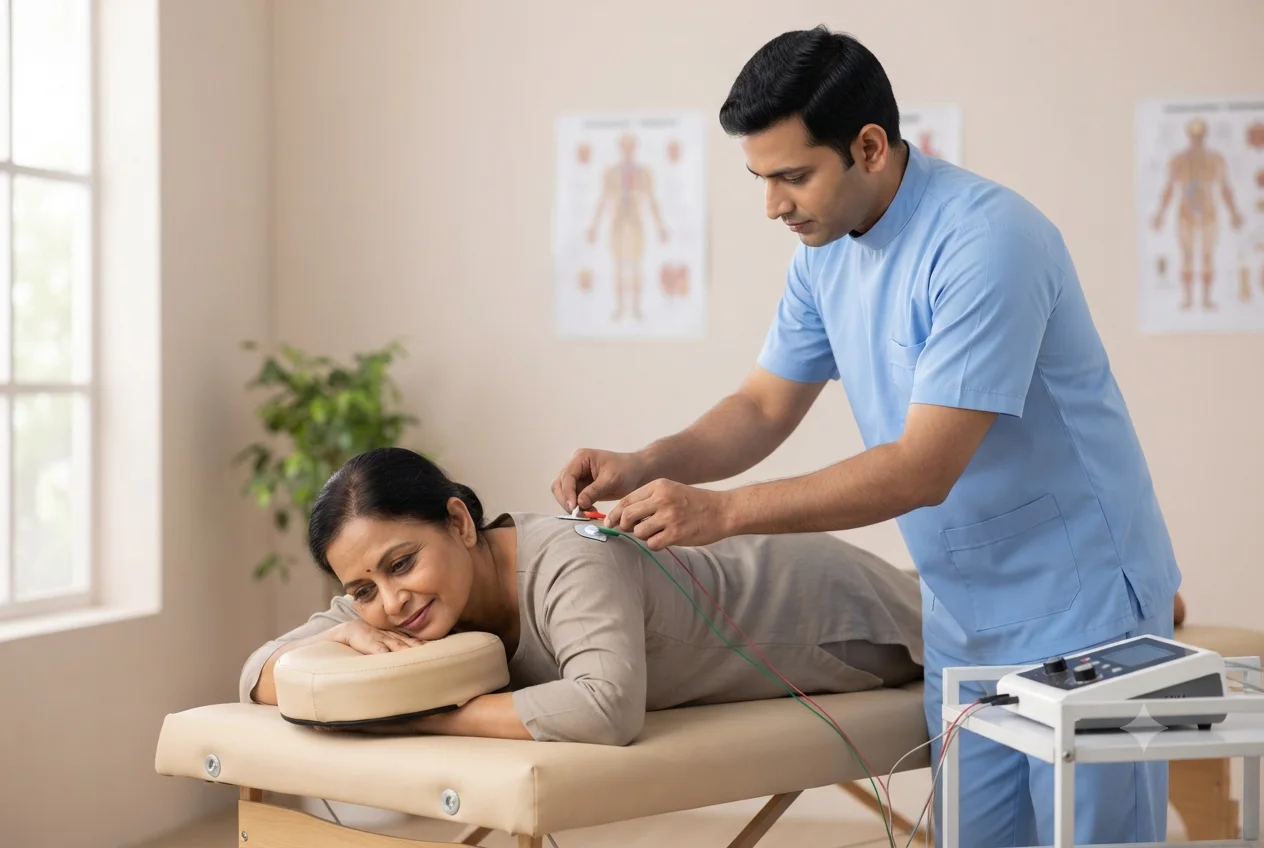
Many people search for electropathy treatment when they mean electrical therapy for pain and muscle weakness. Our care is physiotherapist-guided electrotherapy after assessment, not electro-homeopathy remedies.
In physiotherapy, electropathy treatment generally refers to electrotherapy, the use of controlled electrical currents or other energy from a machine to help manage pain, activate weak muscles and support recovery.
The word "electropathy" is used loosely. It should not be confused with electro-homeopathy, a separate system of herbal remedies that is not part of our care. At Calm n Cure, electrotherapy is delivered by a physiotherapist, only after assessment and safety screening.
Electrotherapy is usually a supporting treatment. It is combined with therapeutic exercise, manual techniques, posture education and a home exercise programme, because lasting recovery depends on active rehabilitation.
Settings and treatment areas are chosen according to your condition and tolerance.
A physiotherapist decides whether electrotherapy is clinically appropriate for you.
The wider goal is comfortable movement and better everyday function.
Exercise builds on any short-term relief that electrotherapy provides.
Suitability depends on the diagnosis, symptoms, stage of recovery and clinical findings. An assessment should come before treatment.
Persistent or movement-related back pain may be assessed for electrotherapy as an addition to exercise-based care.
Muscle-related neck and shoulder pain may be considered for pain-relief modalities alongside mobility and strengthening.
Joint pain from conditions such as osteoarthritis may be assessed for short-term symptom relief within a wider plan.
Electrical muscle stimulation may help activate muscles that are weak or hard to contract after injury or immobilisation.
Soft-tissue pain from overuse or sports strain may be treated with suitable modalities as part of rehabilitation.
After surgery and with your surgeon's clearance, electrotherapy may support muscle activation during recovery.
Different modalities suit different problems. Which one is used, if any, depends on your assessment and on what is appropriate and available.
The evidence for these treatments varies by condition and modality, so they are generally used as an addition to exercise and education rather than on their own.
Low-voltage pulses through skin pads that may temporarily reduce pain in some people.
Medium-frequency currents used for pain relief and muscle relaxation in deeper tissues.
Sound waves applied with a probe to selected soft-tissue conditions, when suitable.
Stimulation that helps activate weak muscles during exercise-based rehabilitation.
Your first visit includes a discussion of your symptoms and medical history, followed by a physical examination before any electrotherapy is considered.
During treatment you should feel a tingling, buzzing or gentle muscle contraction, never sharp or burning pain. Tell your physiotherapist straight away if the sensation is uncomfortable.
Symptoms, medical history, movement and muscle findings are reviewed.
Implanted devices, skin condition, sensation, pregnancy and other precautions are checked.
Settings are adjusted to your comfort and monitored throughout the session.
Active rehabilitation is added, and progress is reviewed at each stage.
Responses vary between people and between conditions. Electrotherapy is non-invasive and uses no needles or medication.
Relief from electrotherapy alone is usually temporary. Lasting improvement generally comes from addressing strength, mobility, posture and movement habits.
That is why your plan combines electrotherapy with exercise and education, and relies less on the machine as you recover.
Electrotherapy may be considered for some musculoskeletal problems once a physiotherapist has assessed you and found no reason to avoid it.
Electrotherapy is generally avoided with pacemakers or other implanted electronic devices, during pregnancy over the abdomen or lower back, over areas with cancer, a blood clot, broken or infected skin or reduced sensation, and in people with epilepsy or certain heart conditions. Tell your physiotherapist about your full medical history.
See a doctor promptly for severe or worsening pain, fever, new weakness, or loss of bladder or bowel control. Seek urgent care for chest pain or breathlessness. Electrotherapy should never be used to mask serious symptoms.
A comprehensive plan combines different approaches according to your findings and goals.
Progressive strengthening and mobility work that forms the core of recovery.
Hands-on techniques to ease stiffness and tension when appropriate.
Practical advice on sitting, working and lifting to reduce repeat strain.
A simple routine and self-care guidance to maintain progress between visits.
Calm n Cure Physiotherapy Center focuses on understanding your symptoms and movement limitations before selecting any modality, and is clear about what electrotherapy can and cannot do.
Book a physiotherapy assessment in Gurgaon. Our team can review your symptoms and explain whether electrotherapy is suitable and what a realistic plan could look like.
Book an AssessmentCommon questions about electrotherapy, safety, sessions and what to expect.
Share your basic details and concern. The Calm n Cure clinic team can discuss your symptoms, assessment requirements and the next appropriate step.
Medical note: Electrotherapy is one component of physiotherapy and is not suitable for every person or condition. It is used to support, not replace, exercise-based rehabilitation and medical diagnosis or treatment. Treatment should be recommended and administered by a qualified physiotherapist after an appropriate assessment. Individual treatment plans and outcomes vary.